Concerns Growing about Global Food Security after Dam Breach in Ukraine
Increased risk to the world’s breadbasket
“This is a breadbasket—that whole area going down towards the Black Sea and Crimea is a breadbasket not only for Ukraine but also for the world,” said Griffiths to the BBC. “We’re already facing difficulties with food security, but food prices are bound to increase.”
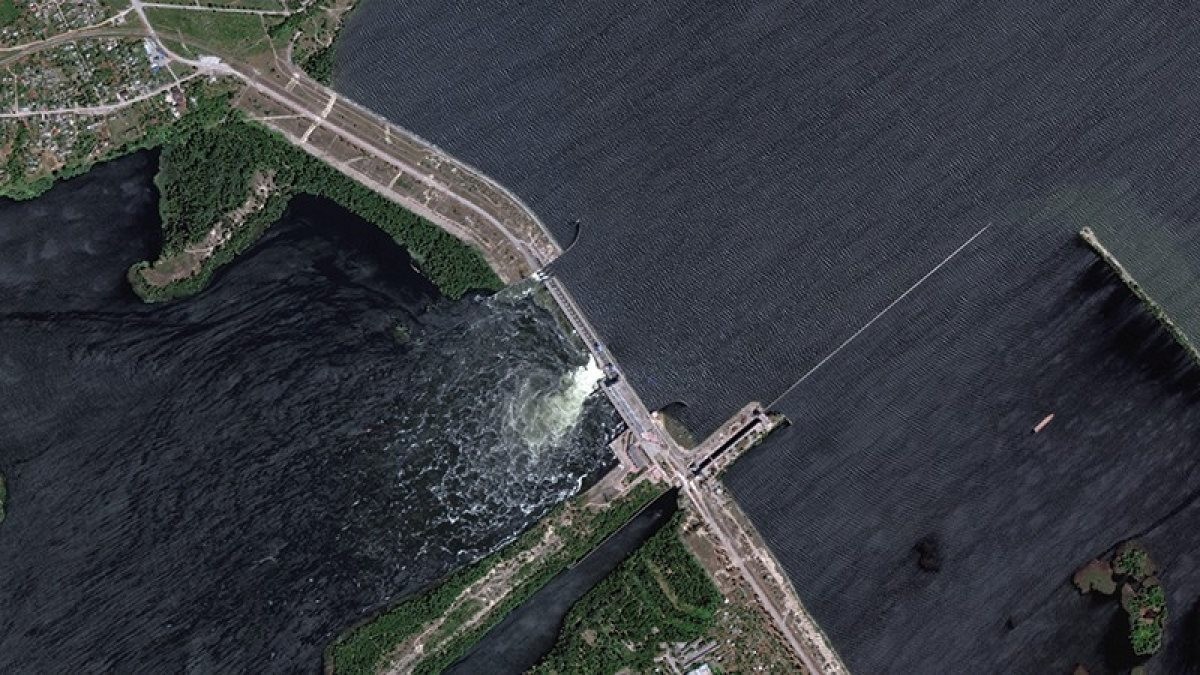 |
| Satellite image of the Kakhovka hydroelectric dam on the Dnipro River in Kherson (: Maxar Technologies/Reuters) |
The concerns arise during a period when the Nova Kakhovka dam serves as a crucial water supply for millions residing in Kherson, as well as the Dnipro and Zaporizhzhia regions. The dam plays a significant role in agricultural irrigation in southern Kherson and Crimea, which experienced a severe breach on June 6, 2023. The incident occurred in Kherson province, within the region under Russian control.
The Ukrainian Agrarian and Food Ministry announced that approximately 10,000 hectares of agricultural land on the western side of Ukraine, under Ukrainian control, are predicted to be submerged due to the dam breach. The most recent report indicates that the breach of the dam has resulted in 94% of the irrigation system in Kherson being deprived of water, along with 74% in Zaporizhzhia and 30% in the Dnipro region. Fields in southern Ukraine could “turn into deserts,” warned the Ministry.
The conflict between Russia and its neighboring country in February 2022 had a notable influence on the global agricultural food industry, given that Ukraine ranks among the largest producers of wheat and sunflower oil worldwide.
Ukraine held a position among the top five global grain producers before the Russian military campaign in the country. Since Ukraine contributed approximately 15% of global corn exports and 12% of global wheat exports, any obstacles that impede access to Ukrainian grain exports could worsen worldwide food insecurity, as witnessed during the initial stages of Russia’s conflict in Ukraine.
Are food supplies being weaponized?
The destruction of the Kakhovka dam and hydropower plant, situated in a Russian-controlled area along the Dnieper River, has sparked concerns about the potential disruption of Ukraine’s ability to supply affordable wheat, barley, corn, and sunflower oil to developing countries where people are already dealing with livelihood challenges, hunger, and rising food costs.
The signing of the Black Sea Grain Initiative in July 2022 between Russia and Ukraine established secure pathways for the transportation of food and fertilizer until July 17, 2023. This agreement has helped lower global food prices and enhance food security in impoverished nations across Africa and Asia. Despite the ongoing Russian-Ukrainian conflict, over 30.3 million metric tons of grain have been successfully transported through the Black Sea corridor since August 2022, with approximately 57% of these grain exports being sent to countries such as Yemen, Ethiopia, Djibouti, Somalia, and Afghanistan.
The Black Sea Grain Initiative is now in jeopardy as Russia considers withdrawing from the agreement, as Russian President Vladimir Putin stated during a press conference on June 13, 2023. Food exports have been significantly reduced as an outcome of this potential withdrawal. The impasse in renewing the agreement is primarily due to clauses pertaining to Russian interests, raising concerns that Moscow could potentially use the agreement to “blackmail” Western nations into removing sanctions.
Experts are also concerned that Russia could use the food transportation route as a weapon of war, increasing its control over the global supply chain. This situation is exacerbated due to numerous Ukrainian grain ships still being stranded in the Black Sea.
“People are going to be watching to see what happens with the agreement,” said Glauber, former chief economist at the U.S. Department of Agriculture. “This reminds everyone that it’s not just pro forma, that this could be a very serious development if indeed the agreement is broken.”
The post Concerns Growing about Global Food Security after Dam Breach in Ukraine appeared first on Vietexplorer.com.
View more from VietExplorer:
Special maturity ritual ceremony of Dao Tien ethnic people in Cao BangBeauty of Ta Leng golden terraces
Liverpool boss Klopp compares anti-vax movement to drink driving
Vietnamese player scores best goal at FIFA Futsal World Cup 2021
Vietnam Professional Basketball League names NovaWorld Phan Thiet as new title sponsor
Ngai Thau Thuong – highest village in Vietnam
Vietnam to welcome international tourists from November
Live Fully in Viet Nam campaign to kick-off inbound tourism
FDI inflow into Vietnam still on upturn trend
Hanoi – Past and present brought to life in paintings
Vietnamese films to be screened at Expo 2020 Dubai
Goethe-Institut’s science film festival goes virtual this year
Quang Ninh to hold 50 tourism stimulus events by year’s end
Trang An complex boasts charming fall ambience
Condé Nast Traveler: Vietnam among top destinations in October
Exploring the Ancient Forging Village of the Nung People
Con Dao prepares to welcome domestic tourists on charter flights
After Phu Quoc and other destinations reopen, Vietnam will fully open to foreign tourists
Chasing gold in Hoang Su Phi terraced rice fields
From singing to donating veggies: Foreigners encourage Vietnamese to overcome pandemic


Comments
Post a Comment